
Manifestos and texts
The Rosicrucian Manifestos
Between 1614 and 1616 three anonymous booklets announce to Europe the existence of a secret brotherhood of sages. Nobody knows where it is, everybody looks for it: so the Rosicrucian myth is born.
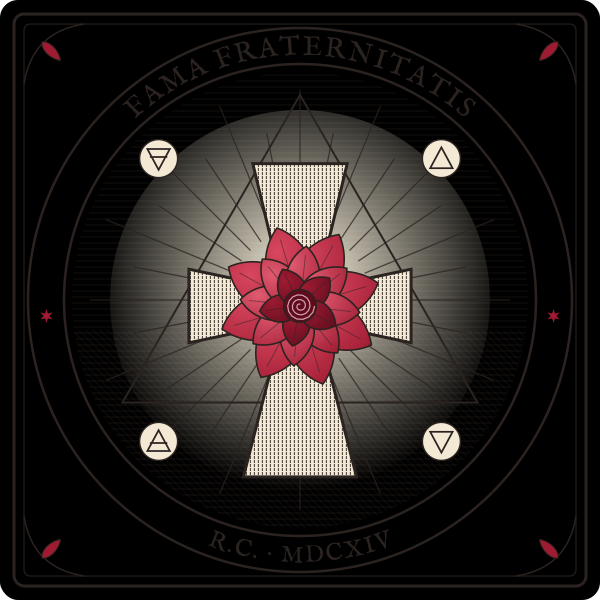
In 1614, in Kassel, the printer Wilhelm Wessel published a German booklet with a very long title announcing a “universal and general reformation of the whole wide world”. It contained two texts. The first was a translation of a satirical chapter from the Ragguagli di Parnaso by the Italian Traiano Boccalini, in which Apollo tries in vain to reform humankind. The second was a manifesto: the Fama Fraternitatis, the “fame of the brotherhood” of the order of the Rose Cross.
A hidden brotherhood
The Fama told the story of a German sage, identified by the initials C.R., who in the fifteenth century had travelled in the East, learned the sciences of the Arabs and, on his return, founded a small community of brothers devoted to the knowledge of nature and to healing the sick free of charge. The text — whose hero we call Christian Rosenkreuz — announced that his tomb had just been found and that the time had come to reveal themselves to the world. The brothers invited the learned men of Europe to come forward and give their opinion, by word of mouth or in writing: whoever was sincere, the manifesto promised, would be found.
The manuscript had already been circulating among a few readers for some years. Print turned it into a European sensation.
The Confessio and the Wedding
In 1615 the Confessio Fraternitatis appeared, again in Kassel, in Latin. It took up the first manifesto in a more apocalyptic tone: it announced the imminent end of the age, attacked the papacy, declared the harmony between the Bible and the book of nature, and gave the founder's year of birth, 1378. The following year a text of a different kind appeared in Strasbourg, an allegorical romance: the Chymical Wedding of Christian Rosenkreuz.
Rosicrucian fever
The effect was extraordinary. Within a few years hundreds of replies were printed: open letters from people asking to be admitted, enthusiastic defences, fierce attacks, satires. Physicians, alchemists, theologians and charlatans argued about a society nobody had ever seen. Scholars call this phenomenon the “Rosicrucian furore”. Among its most illustrious defenders were the German physician Michael Maier and the Englishman Robert Fludd.
In 1623 the fever reached Paris: posters appeared on the city walls in which the “deputies of the principal College of the brothers of the Rose Cross” declared that they were staying in the city both visibly and invisibly. A small panic broke out; according to his first biographer, even the young Descartes, back from Germany, was suspected of being a Rosicrucian.
Who wrote them?
Historians agree in linking the manifestos to a circle of Lutheran intellectuals in Tübingen, gathered around the young theologian Johann Valentin Andreae and the lawyer and physician Tobias Hess. Andreae admitted to having written the Chymical Wedding in his youth, and later called the whole affair a ludibrium, a game, a play. What he meant by that word is still debated: a joke to be taken lightly, or a serious “comedy”, an allegory meant to stir consciences?
The historian Frances Yates proposed placing the manifestos in the political and religious climate before the Thirty Years' War, linking them to the hopes pinned on the Elector Palatine Frederick V. Her thesis is fascinating but much disputed.
An endless legacy
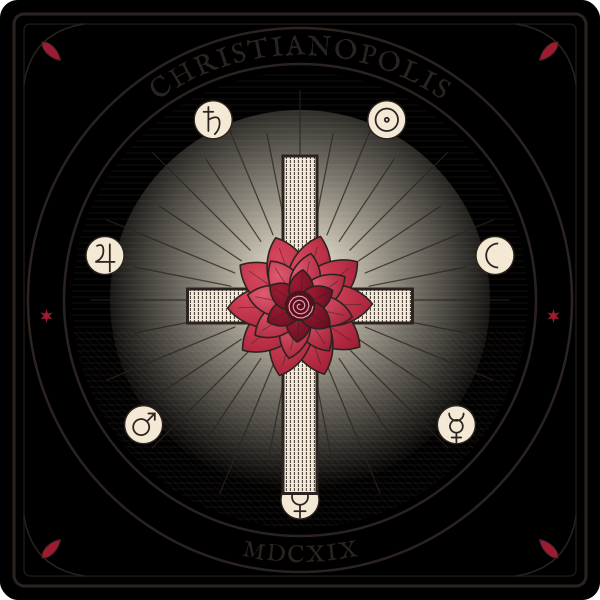
That the brotherhood described in the Fama ever existed in that form is very unlikely. But its programme — knowledge uniting faith, nature and medicine, placed at the service of all — has crossed the centuries. In the eighteenth and nineteenth centuries many initiatory societies claimed the Rosicrucian name, and the symbol of the rose on the cross became one of the most recognisable in Western esotericism. Rarely have three anonymous booklets had so great a destiny.
Watch the video
Sources and further reading
- Fama Fraternitatis (Kassel, 1614)
- Confessio Fraternitatis (Kassel, 1615)
- Chymische Hochzeit Christiani Rosencreutz (Strasbourg, 1616)
- Traiano Boccalini, Ragguagli di Parnaso (1612)
- F. A. Yates, The Rosicrucian Enlightenment (1972)
- C. Gilly, Cimelia Rhodostaurotica (1995)
Read next
Christian Rosenkreuz, the legendary founder
Born in 1378, raised in a monastery, taught by the sages of the East, buried in a seven-sided vault found 120 years later: the life of the founder of the Rosicrucians according to the manifestos.
The Chymical Wedding of Christian Rosenkreuz
Seven days, an invitation to a king's wedding, guests weighed on a scale, sovereigns beheaded and brought back to life in a tower: the most enigmatic alchemical romance of the seventeenth century.
Johann Valentin Andreae, the theologian behind the Rosicrucians
Grandson of a Lutheran reformer, traveller, utopian, admirer of Campanella: the man who wrote the Chymical Wedding and then called the whole Rosicrucian affair “a game”.
