People
Paracelsus, the physician who burned Avicenna
Wandering physician, alchemist, reformer of medicine and father of the elemental spirits: Paracelsus died in 1541, but the Rosicrucian manifestos treat him as a forerunner.
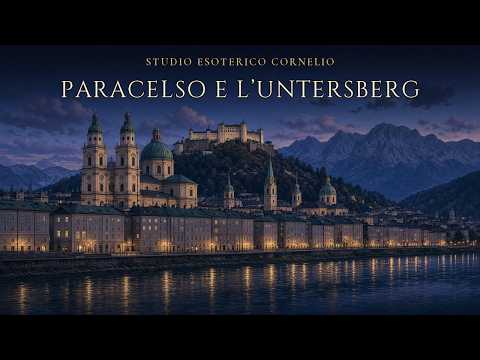
Theophrastus Bombastus von Hohenheim was born in 1493 or 1494 at Einsiedeln, in Switzerland, the son of a physician. He called himself Paracelsus, perhaps to claim superiority over the Roman physician Celsus. He travelled all over Europe as an army surgeon and itinerant doctor, learning, he said, more from barbers, miners and village healers than from the universities. He died in Salzburg in 1541. Seventy years later the Rosicrucian manifestos named him as one of the spirits who had prepared the reform of knowledge.
The scandal of Basel
In 1527 Paracelsus was appointed city physician of Basel and professor at the university. He lectured in German instead of Latin and, during the St John's Eve bonfires, threw a book of traditional medicine into the flames, perhaps Avicenna's Canon, to show that the old science had to be left behind. His temper and his polemics made enemies everywhere: less than two years later he had to leave the city in secret. The motto attributed to him says it all: let no one belong to another who can belong to himself.
A chemical medicine
Against the theory of humours, Paracelsus argued that diseases have specific causes and must be treated with specific remedies, often prepared in the laboratory: minerals, metals, extracts. This is why he is considered the father of iatrochemistry. To the four qualities he added the three principles, sulphur, mercury and salt, which became the language of generations of alchemists. He is also credited with the principle that the dose makes the poison.
The world as a sign
For Paracelsus man is a small world reflecting the great one, and nature is a book written by God: plants bear the signatures of their virtues, and the physician must be able to read them. In the Book on Nymphs, Sylphs, Pygmies and Salamanders he described the inhabitants of the elements, soulless creatures living in water, air, earth and fire: the origin of the elemental spirits of later esoteric literature.
In the vault of Christian Rosenkreuz
In the Fama Fraternitatis of 1614, among the objects found in the vault of the legendary founder, there is also a vocabulary by Paracelsus. The text specifies that he was not a member of the fraternity, but that he diligently read the mysterious Book M. It is an explicit acknowledgement: the Rosicrucian programme, a reform of knowledge grounded in nature, medicine and faith, was born among the German Paracelsians.
The legacy
Paracelsus' followers, including many of the first readers of the manifestos, went on publishing his works for decades after his death. Since then his name has been linked to alchemy, natural medicine and esotericism. For his presence in the founding texts see the Rosicrucian manifestos and the legend of Christian Rosenkreuz; for the generation of physician-alchemists who defended the Fraternity, Michael Maier and Robert Fludd.
Watch the video
Sources and further reading
- Paracelsus, Opus paramirum (1531)
- Paracelsus, Liber de nymphis, sylphis, pygmaeis et salamandris (ed. 1566)
- Fama Fraternitatis (1614)
- W. Pagel, Paracelsus. An Introduction to Philosophical Medicine in the Era of the Renaissance (1958)
- C. Webster, Paracelsus. Medicine, Magic and Mission at the End of Time (2008)
Read next
Johann Valentin Andreae, the theologian behind the Rosicrucians
Grandson of a Lutheran reformer, traveller, utopian, admirer of Campanella: the man who wrote the Chymical Wedding and then called the whole Rosicrucian affair “a game”.
Michael Maier and Robert Fludd, defenders of the Fraternity
An alchemist physician at the court of Rudolf II and a London physician with a passion for the cosmos: the two great defenders of the Rosicrucians and their illustrated books, masterpieces of seventeenth-century engraving.
Cagliostro, the magician from Palermo
Born Giuseppe Balsamo in the Albergheria quarter, he became Count Cagliostro: healer, founder of an Egyptian Freemasonry, protagonist of the necklace scandal, who died a prisoner at San Leo.
